


Quick Fix for Storm Damage Roof – 24/7 Emergency Repair in Cocoa
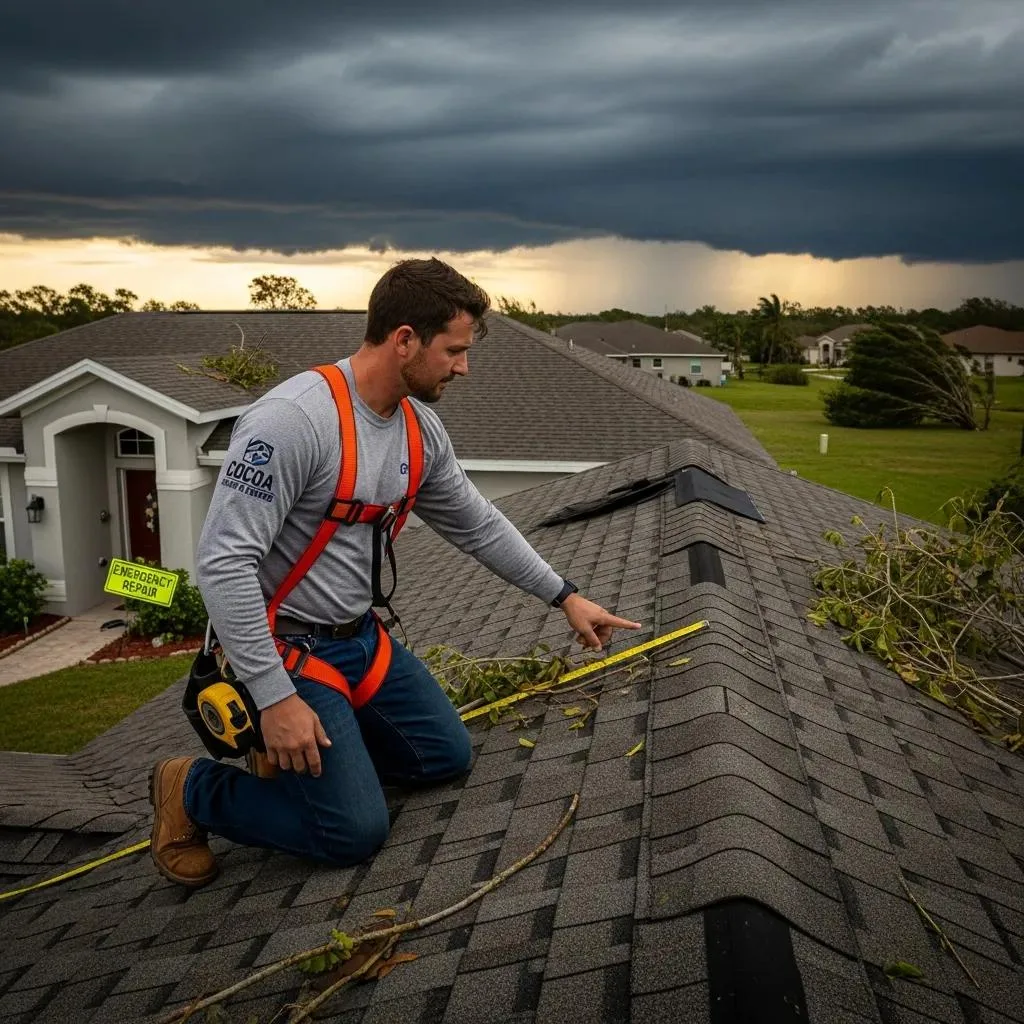
Emergency Roof Repair in Cocoa, FL – Fast 24/7 Response by American Masters Roofing & Restoration
When a roof fails during a storm in Cocoa, FL, every minute counts to protect people and property; Emergency roof repair services provide immediate stabilization and rapid mitigation to stop water intrusion and limit structural damage. This article explains how to recognize a roofing emergency, what to do right away to preserve safety and evidence for insurance, and how a local 24/7 roofer responds from first call to permanent restoration. Readers will learn the common storm damage signs that require urgent action, the step-by-step emergency response workflow including temporary tarping and drone inspection options, and the range of emergency services available for both residential and commercial properties. We also cover practical homeowner actions, permitting and inspection advantages that speed repairs under current Florida building codes, and what to expect with insurance claim support. Throughout, targeted terms like “emergency roofing service,” “storm damage roof,” and “fast roof leak repair Cocoa” are used to help Cocoa homeowners and businesses find the right immediate solutions when a roofing emergency occurs.
What Constitutes a Roofing Emergency in Cocoa, FL?
A roofing emergency in Cocoa, FL is any condition that creates an immediate risk to occupant safety or imminent damage to interior spaces, such as active leaks, exposed roof decking, or structural sagging. Coastal and hurricane-prone conditions increase the likelihood that wind uplift, hail, or fallen debris will rapidly degrade a roof’s ability to shed water, which accelerates secondary damage to ceilings, insulation, and structural members. Recognizing an emergency means prioritizing human safety and stopping water intrusion—both critical to limiting long-term restoration costs and insurance complications. Understanding these criteria helps homeowners decide when to call an emergency roofing service rather than waiting for a routine contractor visit.
Which common scenarios qualify as roofing emergencies are listed below with quick visual cues to identify severity:
- Active interior leaks: Water streaming or pooling inside ceilings, walls, or attics.
- Large missing roof areas: Visible sections of decking or sheathing exposed after shingle or panel loss.
- Sagging or deformed roof planes: Noticeable dips or structural compromise indicating load failure.
- Debris penetration: Fallen trees or large limbs that puncture or displace roofing components.
These scenarios indicate urgent intervention is needed to protect occupants and preserve evidence for storm-related insurance claims. Recognizing these signs leads naturally to practical immediate steps for mitigation and contacting a local 24-hour roofer in Cocoa.
Which Common Storm Damages Require Immediate Roof Repair?
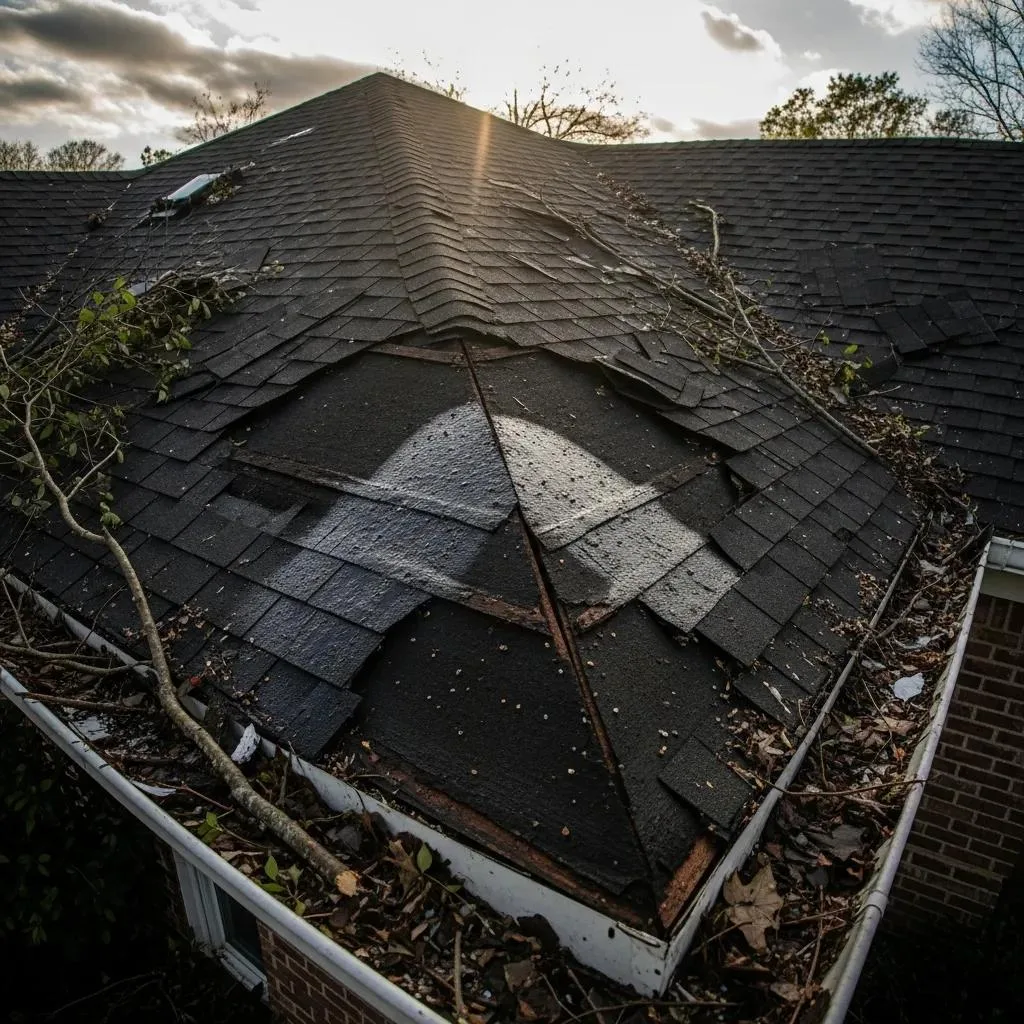
Storm-related forces such as wind uplift, wind-driven rain, and hail create distinct damage patterns that can escalate into roofing emergencies if left unaddressed. Wind uplift often tears shingles or membrane sections away, exposing underlayment and decking; this exposure rapidly allows water intrusion during subsequent rainfall. Hail can puncture shingles and flat-roof membranes, creating hairline breaches that may not be obvious until water shows up inside. When decking is exposed or roof planes sag, secondary damage such as mold growth and ceiling collapse becomes likely, which increases restoration scope and cost. Temporary stabilization—like professional tarping and prompt documentation—reduces further deterioration and preserves claim validity while permanent repairs are arranged.
How Does Our 24/7 Emergency Roof Repair Service in Cocoa Work?
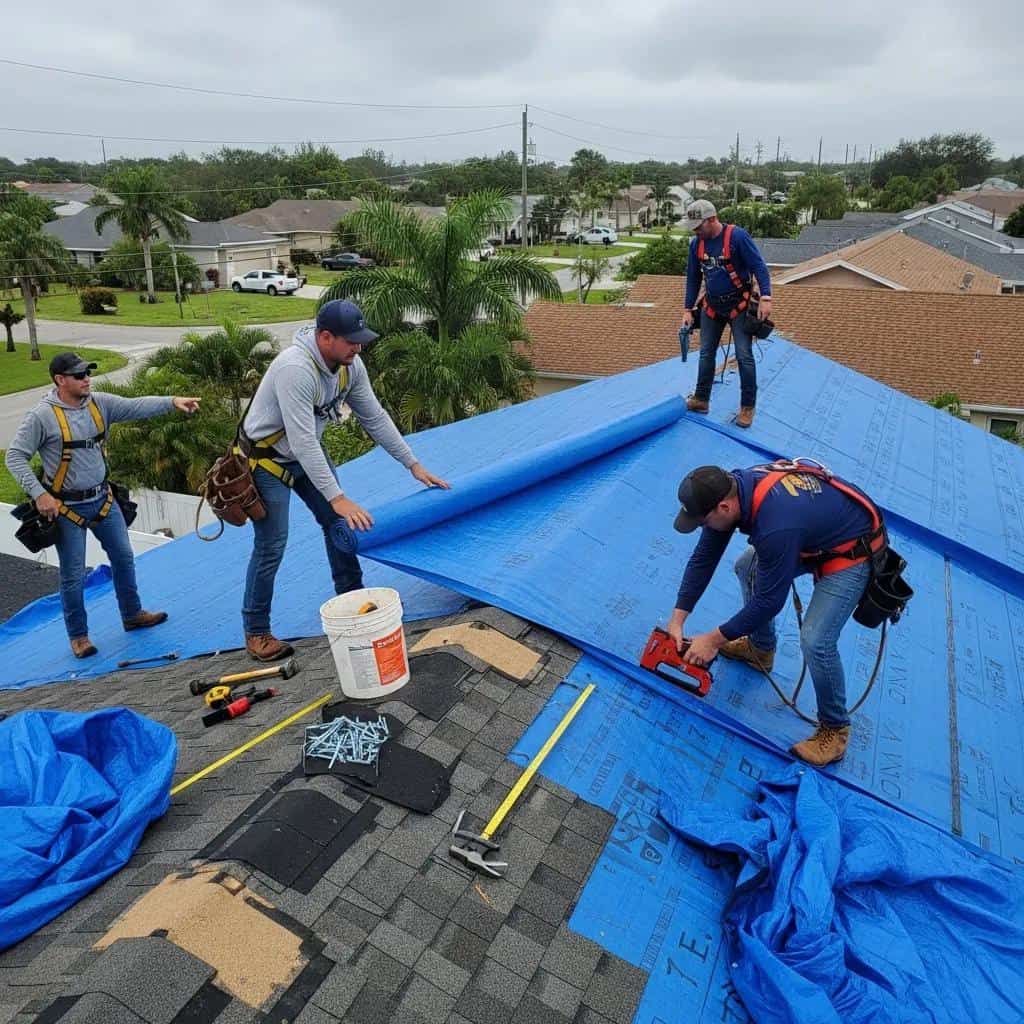
Emergency roof repair workflow centers on rapid triage, immediate stabilization, and a clear path to permanent restoration while protecting people and property. A typical response begins with an intake that assesses immediate hazards and collects photos, followed by rapid dispatch of a trained crew for on-site triage and temporary protection. On-site procedures include safety staging, drone or visual inspection to document damage, and temporary measures such as tarping or patching to stop active leaks. This process reduces interior damage and establishes documentation useful for insurance claims and repair planning.
- Call intake and triage: Initial questions establish location, safety issues, and visible damage for dispatch priority.
- Rapid on-site assessment: Visual and drone inspections evaluate scope, structural risk, and temporary stabilization needs.
- Temporary protection: Professional tarping, patching, or temporary membrane installation prevents additional water intrusion.
- Estimate and next steps: Documented estimate, insurance coordination, permitting discussion, and scheduling of permanent repair.
After the numbered steps above, expect a short-term plan that secures the property and an estimate that outlines permanent repair options compliant with current Florida building codes. For those needing immediate help, American Masters Roofing & Restoration operates a fast-response emergency protocol and maintains a 24/7 response capability for Cocoa-area storm events; the team conducts triage, arranges temporary protection, and documents damage to support insurance claims while planning code-compliant restoration.
What Are the Steps from Initial Call to Roof Repair Completion?
The pathway from initial emergency call to completed repair follows predictable milestones that reduce uncertainty and speed recovery. First, intake gathers essential details—location, visible damage, and any immediate safety concerns—so the dispatcher can prioritize the response and prepare appropriate crews and materials. On arrival, the crew performs a safety-first inspection, uses drone imaging or photographs to document damage, and implements temporary stabilization such as tarping or spot repairs to prevent further water entry. Next steps include creating a detailed estimate with scope-of-work documentation useful for insurers, coordinating adjuster visits, securing any necessary permits (often accelerated using private providers), and scheduling the permanent repair or replacement to meet current Florida building codes. Clear communication at each step helps homeowners and business owners plan displacement, insurance documentation, and final restoration.
What Emergency Roofing Services Are Available for Cocoa Homeowners and Businesses?
Emergency roofing services for Cocoa properties cover a spectrum of immediate and follow-up actions tailored to residential and commercial building types. Services include emergency tarping and patching to stop leaks, expedited leak detection and temporary repairs, storm damage roof repair and partial or full emergency replacement, and commercial flat-roof emergency solutions designed to secure large surface areas. Providers also offer documentation and insurance-claim support, and in many cases can use accelerated permitting and inspection pathways to reduce project delays. These services are designed to stabilize properties immediately, then transition to full restoration that complies with current building codes and minimizes long-term disruption.
Common emergency offerings are summarized in the list below to guide decision-making:
- Emergency Tarping and Temporary Protection: Immediate waterproofing to prevent interior damage.
- Fast Roof Leak Repair: Rapid diagnostics and targeted repairs to stop active water entry.
- Storm Damage Repair & Restoration: Scopes ranging from shingle replacement to structural decking repair and full roof replacement.
- Commercial Emergency Roofing: Rapid response for flat roofs, membrane repairs, and large-area stabilization.
Before the table below, note that residential repairs typically emphasize minimal disruption and matched materials, while commercial responses prioritize safe access, large-area containment, and continuity of operations. If you need urgent assistance, contact a local 24/7 roofer to prioritize response and arrange fast stabilization; you can call or submit an emergency form to request immediate triage and temporary protection.
Intro to EAV comparison table for homeowners vs commercial clients:
This comparison clarifies how response scale and objectives differ between home and business properties. Prioritizing the correct emergency service helps limit secondary damage and positions the project for efficient permanent restoration.
How Do We Handle Storm Damage Roof Repair in Cocoa, FL?
Storm damage repair follows a triage → temporary protection → permanent repair progression focused on safety and code compliance. Technicians first assess structural integrity, identify compromised decking or framing, and prioritize areas causing active leaks or occupant risk. Temporary measures, such as professional tarping and localized repairs, stop further water intrusion while documentation and estimates are prepared. Permanent repairs or replacements are completed to meet current Florida building codes, ensuring wind-resistance and proper flashing; the scope often includes shingle or membrane replacement, flashing repair, and any decking or structural repairs required for a code-compliant restoration.
What Solutions Do We Provide for Urgent Roof Leak Repair and Tarping?
Urgent leak repair begins with rapid interior and attic inspection to trace water entry pathways, followed by targeted external access to identify the breach—commonly around flashings, penetrations, or compromised shingles. Professional tarping uses anchored, weather-rated materials installed by trained crews to maintain a waterproof envelope until permanent repairs are scheduled. Temporary patches or fast-set materials may be used when conditions allow, but technicians prioritize solutions that prevent secondary damage without masking major structural issues. After stabilization, a follow-up inspection defines permanent repair scope and timeline, transitioning the property from emergency mode to full restoration planning.
Before the next section, the EAV table below compares core emergency services with response characteristics:
This table helps owners prioritize which service fits their immediate needs and sets expectations for timelines and outcomes.
Why Choose American Masters Roofing & Restoration for Emergency Roof Repair in Cocoa?
Choosing a provider for emergency roof repair requires trust in technical competence, regulatory compliance, and claims support; American Masters Roofing & Restoration brings licensed contracting credentials, documented storm restoration experience, and processes designed to accelerate recovery. The company is a state-licensed general contractor (CBC 1266052/CCC1334402) and emphasizes repairs and replacements that meet current Florida building codes. Experienced teams use private providers where available to reduce permitting and inspection timelines, and they assist clients with insurance claims documentation and adjuster coordination to streamline storm restoration. These capabilities reduce delays, help ensure code-compliant repairs, and preserve claim validity.
Below is an EAV table showing specific company advantages versus typical provider timelines and benefits:
Highlighting licensing, permitting advantages, and regional storm-restoration experience demonstrates how an experienced provider reduces risk and accelerates recovery for Cocoa property owners. These credentials support confident decision-making when urgent roof stabilization and insurance coordination are required.
How Does Our 30+ Years of Experience and Florida Licensing Benefit You?
Longstanding experience in storm restoration creates practical advantages: faster, more accurate triage; realistic scopes that avoid repeated callbacks; and repairs designed to meet evolving code requirements. Licensed teams ensure work is performed to regulatory standards, which protects homeowners and businesses and simplifies inspections and approvals. Experience also means crews are familiar with common local failure modes—coastal wind uplift, persistent storm-driven rain intrusion, and hurricane-related membrane damages—allowing technicians to propose durable repairs and replacements rather than temporary fixes that fail in subsequent events. These benefits reduce overall downtime and long-term restoration cost while improving resilience against future storms.
How Do Private Providers Accelerate Permitting and Inspections?
Private Providers are qualified third-party inspectors authorized to perform code compliance reviews and inspections outside standard municipal queues, enabling faster turnaround for permits and inspection sign-offs. Where available, using Private Providers can reduce inspection timelines from multiple days or weeks to same-day or next-business-day appointments, which compresses the schedule between estimate approval and repair start. Faster inspections mean quicker material ordering and mobilization of specialized crews, reducing the window of vulnerability after an emergency stabilization. This acceleration has a direct impact on reducing interior damage risks and shortening displacement times for occupants.
What Support Do We Offer for Insurance Claims on Storm Damage?
Effective insurance support begins with thorough documentation: high-resolution photographs, drone imagery, and detailed estimates that clearly separate emergency stabilization from permanent repair scope. The company prepares claims-friendly documentation using industry-standard estimating formats and coordinates with adjusters to explain scope and code-related upgrades required by current Florida building codes. Guiding clients on how to document pre-existing vs storm-related damage, and advising on timely mitigation, helps avoid common claim denials or reductions. Helpful insurer coordination reduces back-and-forth and keeps repairs moving from emergency tarping to full restoration.
Before moving to homeowner actions, this EAV table summarizes insurance support features:
The combination of documentation, professional estimates, and adjuster coordination reduces administrative friction and accelerates restoration timelines for storm-damaged roofs.
What Should You Do Immediately After a Roofing Emergency in Cocoa, FL?
After a roofing emergency, prioritizing safety and stopping further interior damage are the most important immediate actions. Start by ensuring occupants are safe and away from affected areas; avoid electrical hazards around standing water and exposed wiring. Contain leaks with containers and towels, move valuables out of affected rooms if possible, and photograph damage for insurance before performing any permanent fixes. Contact an emergency roofing service promptly to arrange triage and professional temporary protection; early professional tarping significantly reduces secondary damage and strengthens insurance documentation.
Immediate emergency actions are summarized in this quick checklist:
- Ensure safety first: Evacuate unsafe areas and avoid electrical contact with water.
- Contain water: Place buckets and move furniture away from leaks to limit damage.
- Document damage: Photograph interiors and exteriors for insurance evidence.
- Call for emergency triage: Request a rapid assessment and temporary protection from a local 24/7 roofer.
These steps protect occupants and evidence, and they make it easier for emergency crews to act efficiently upon arrival. The next subsection explains specific protective actions to take before repair teams get on site.
How to Protect Your Property Before Emergency Roof Repair Arrives?
Simple, safe interim actions reduce interior losses while you wait for professional response: place clean containers under active drips, lay down plastic sheeting or towels across floors to protect finishes, and move sensitive items like electronics and important documents to a dry area. If it is safe, clear gutters and downspouts of debris to improve drainage and reduce overflow, but avoid stepping on damaged roofs or attempting high-elevation work yourself. Turn off power to affected circuits if water is near electrical fixtures, and document every step with photos to show mitigation efforts for insurance. These measures limit secondary damage and support a smoother transition when the emergency crew arrives to install professional tarping and begin triage.
Before contacting professionals, gather essential information to speed the intake process; the next subsection outlines what to have ready.
When and How to Contact Emergency Roofing Services in Cocoa?
Contact emergency roofing services as soon as a roofing condition threatens safety or causes active interior damage; rapid contact improves chances of same-day triage and temporary protection. When calling or submitting an emergency request, be ready to provide the property address, a brief description of visible damage, any immediate hazards (electrical, structural), and recent storm timing. Photos and short video clips sent via the intake process accelerate triage and help the dispatcher determine crew size, equipment needs, and whether specialized access or large materials will be required. Expect the emergency responder to outline next steps, including temporary stabilization, documentation for insurance, and an estimate for permanent repair.
Provide these details to speed response:
- Location and access information: Exact location and safe entry points.
- Visible damage summary: Active leaks, missing roof areas, fallen debris.
- Safety concerns: Electrical hazards, gas lines, structural instability.
This table provides a quick emergency checklist so homeowners can act safely and preserve claim evidence until professionals arrive.
What Are Frequently Asked Questions About Emergency Roof Repair in Cocoa, FL?
This FAQ section answers common homeowner and business questions concisely to guide immediate expectations and planning after storm damage. Short, actionable responses cover typical insurance coverage scenarios, expected response times for triage and permanent repairs, and how permitting or private inspection options can influence timelines for restoration. These Q&A pairs are designed to be clear for property owners deciding on next steps during a stressful emergency.
Does Insurance Cover Emergency Roof Repair in Florida?
Many homeowner insurance policies cover storm-related roof damage, including emergency stabilization like tarping, but coverage varies by policy and cause of loss; documenting damage and performing timely mitigation are essential to support a claim. Providers that assist with photo documentation and industry-standard estimates improve the likelihood of claim approval and help clarify what portions of stabilization and permanent repairs insurers will cover. For precise coverage details, review your policy and coordinate with your insurer and professional estimator.
How Quickly Can Emergency Roof Repair Be Expected After Storm Damage?
Immediate triage and temporary protection can often be expected same-day to within 24 hours depending on storm severity, crew availability, and site safety; permanent repair timelines vary widely based on insurance approvals, permitting, and material availability. Use of Private Providers for permitting and inspection can compress municipal timelines, allowing repairs to proceed sooner under favorable conditions. Preparing documentation and sharing photos during intake helps the emergency roofer prioritize and dispatch the right resources quickly.
- Immediate triage: Same-day to 24 hours for stabilization.
- Temporary protection: Installed on first visit to limit damage.
- Permanent repair: Days to weeks, depending on approvals and scope.
These expected timelines help property owners set realistic expectations and plan for short-term protection while permanent restoration is arranged. If you require urgent assistance, requesting an emergency triage and tarping visit is the first practical step toward a safe, code-compliant repair.